Practical tarot guide
Tarot versus oracle cards
Tarot usually follows a shared 78-card structure, while an oracle deck’s creator chooses its card count, themes and reading system. Both can be used for reflection. The practical difference is how much structure you want to learn and how closely you want to follow a particular deck’s guidebook.
Arcana Noctis base deck
What stays consistent, and what changes?
Tarot: a shared framework
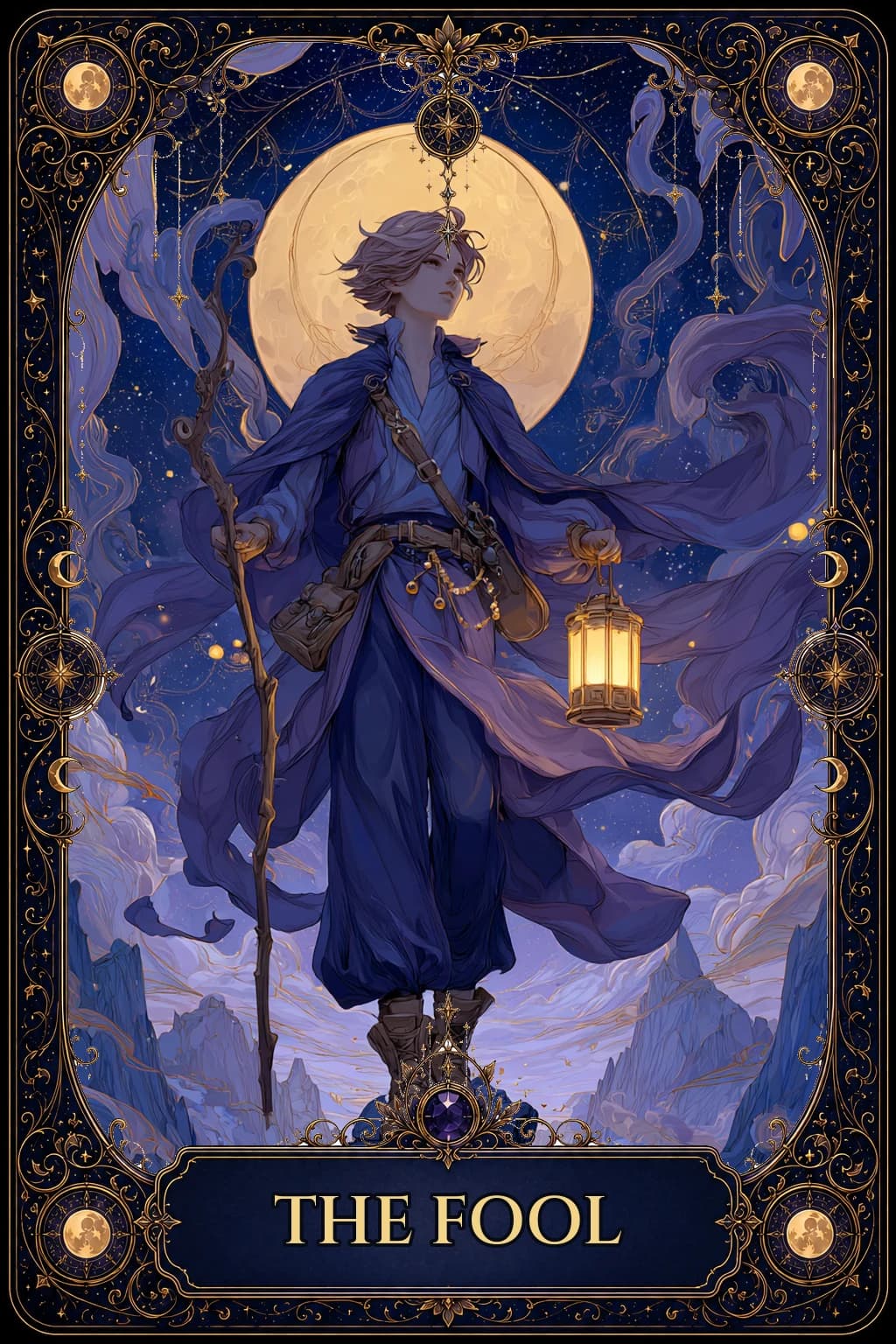
The standard structure used in this encyclopedia has 22 Major Arcana and 56 Minor Arcana, with four suits of fourteen cards. Learning The Fool or the suit of Cups gives you a reference point when you encounter another tarot deck. Artwork, names, numbering and interpretations can still vary, and some decks add cards.
Oracle: a deck-specific framework
An oracle deck may be built around animals, plants, celestial imagery, short phrases or another theme. Do not infer its meanings from tarot numbers or suits unless its creator explicitly uses them. Its guidebook is the best starting point for the intended structure, including whether reversals are used.
A smaller deck is not automatically simpler. Compare the clarity of the guidebook and the way the images speak to you, rather than choosing by card count alone.
Worked example: the same question, two approaches
Ask ‘How might I approach a new creative project?’ With tarot, imagine drawing The Fool. Using this encyclopedia’s meaning, you could explore a small experiment, curiosity and the practical preparation that makes a beginning manageable. In a three-card spread, the same card would also be shaped by its position.
For comparison, imagine an oracle-style practice prompt called ‘Pause and notice’. This phrase is invented for this example; it is not claimed to be a card in a product we sell. You might use it to spend ten minutes looking at what already interests you before deciding on a project. In a real oracle reading, you would first check that deck’s own guidance.
Both approaches could lead to a modest action. The tarot example starts from a shared card identity; the oracle example starts from a particular prompt. Neither result establishes what will happen next.
Choose by the way you want to read
Choose tarot if you enjoy comparing a recurring set of cards, learning suits and exploring relationships between spread positions. An oracle deck may suit you if you want to work with a particular artist’s themes or a more self-contained set of prompts. You can use either one on its own.
Before buying, look at sample artwork, card dimensions, the guidebook language and what is included. Decide whether you want a physical deck or the digital artwork used in the app: these are different products. A reading cloth is an optional surface, not another deck.
For a concrete comparison, the shop listing for Gold Foil Tarot — Let the Magic Begin — Gift Box describes a 78-card deck and guidebook. The Celestial Energy Atlas Oracle Cards listing describes a 40-card deck themed around planets, constellations and star signs. These details were checked on 9 October 2026; consult the current listings for contents and availability.
Browse tarot decks and reading cloths or oracle cards to compare the available options. If you want to explore symbolism first, start with the Moon and notice how a shared motif can receive different interpretations.
Sources and context
- Arcana Noctis: Gold Foil Tarot gift box listing
Catalogue description checked 9 October 2026: 78 cards and a guidebook. No price or stock promise is made here.
- Arcana Noctis: Celestial Energy Atlas Oracle listing
Catalogue description checked 9 October 2026: 40 cards with celestial themes.