
Practical tarot guide
How to interpret reversed tarot cards
A reversed tarot card is a card that appears upside down relative to the reader. If you choose to use reversals, begin with the card’s central theme, then ask whether that theme feels blocked, inward, excessive or in need of adjustment. A reversal does not automatically turn a useful card into a bad one.
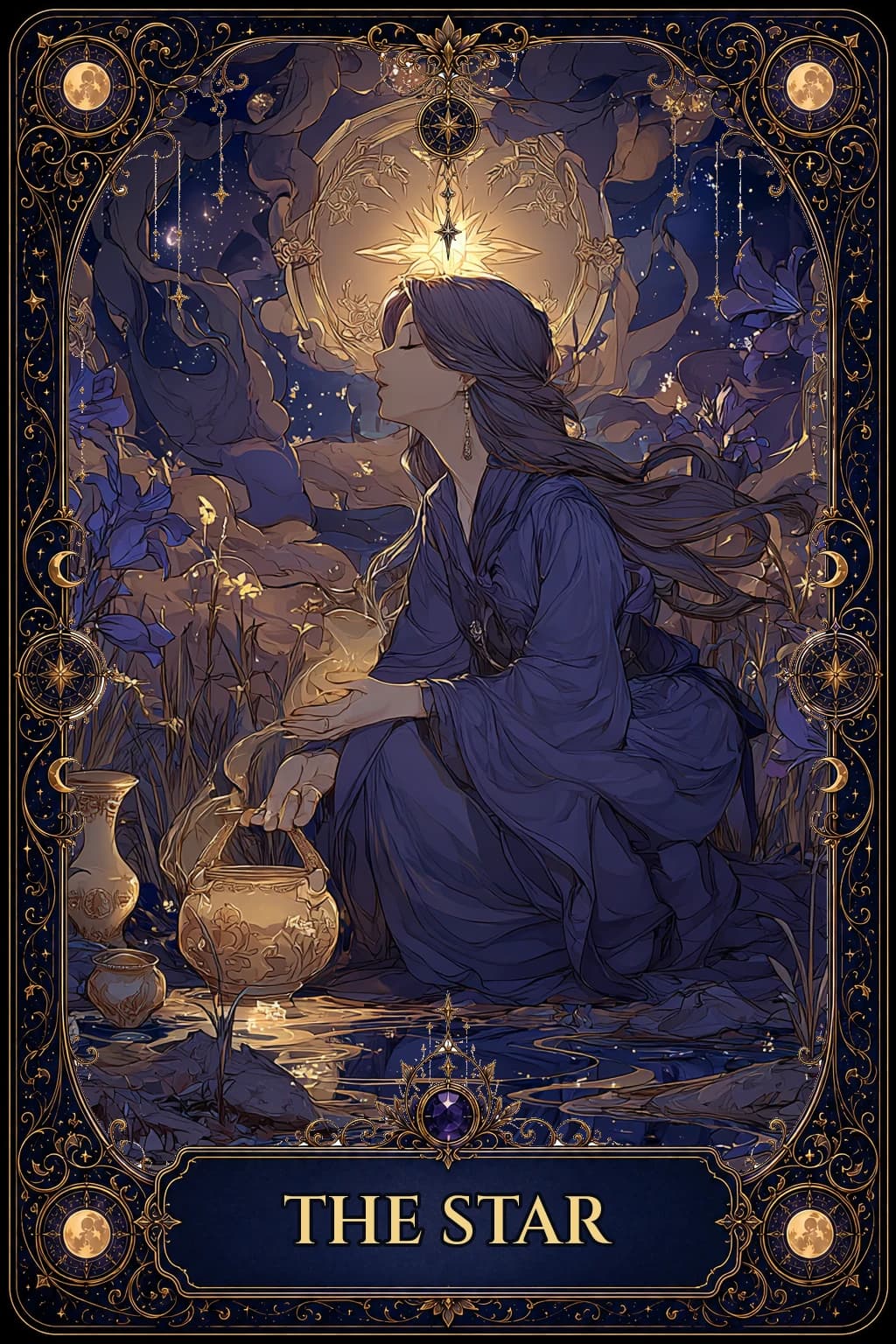
Arcana Noctis base deck
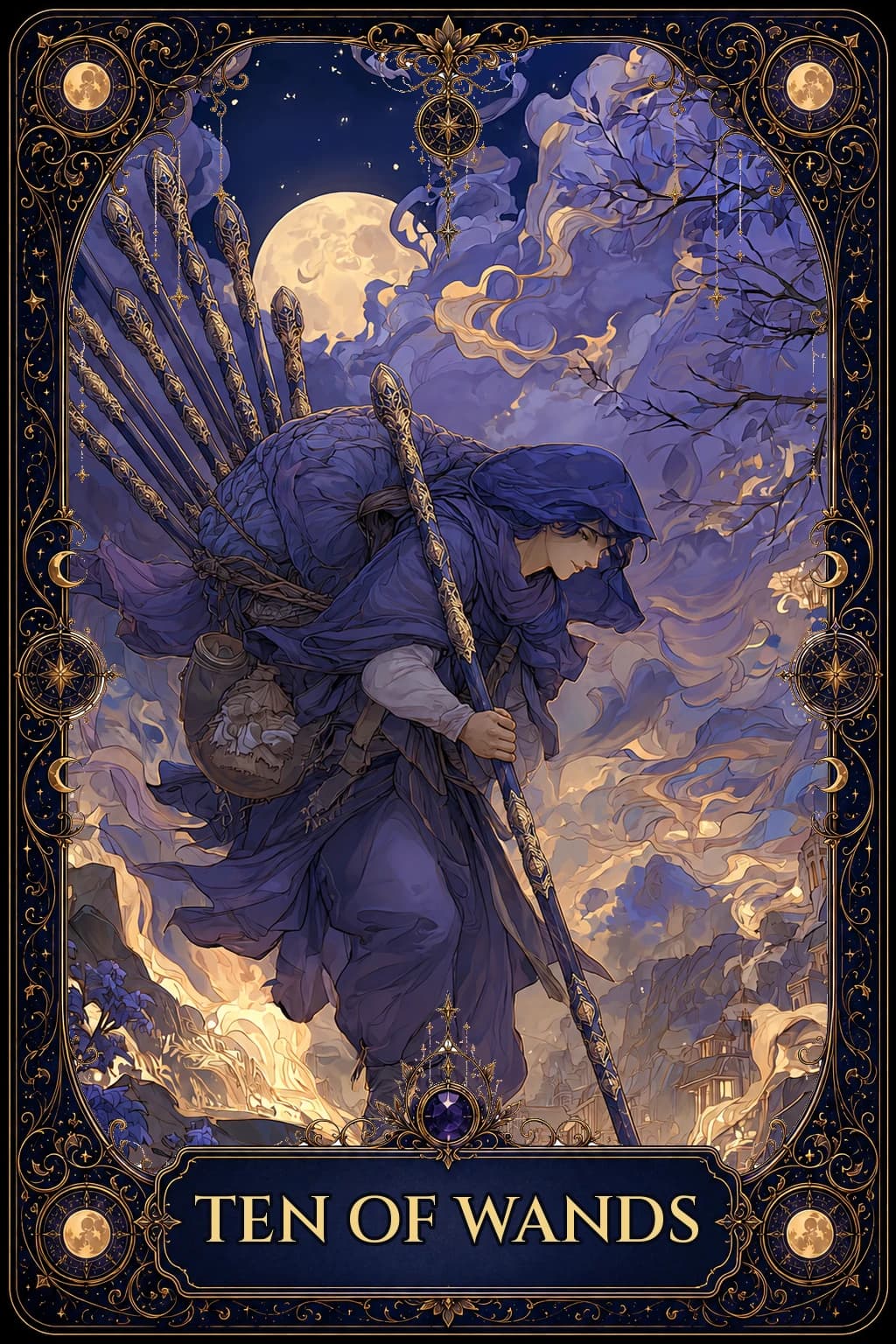
Arcana Noctis base deck
Decide whether you want to use reversals
You can learn with upright cards only. Upright meanings already contain tensions, choices and context; there is no need to add another layer before it feels useful. If you do use reversals, decide before drawing rather than changing the rule when a difficult card appears.
Deck guidebooks differ. A. E. Waite’s The Pictorial Key to the Tarot gives distinct reversed meanings for many cards, but that is one author’s system, not a rule every deck must follow. The approach here is Arcana Noctis’s reflective method: use a reversal to question how a theme is being expressed.
Try four lenses, then choose the one that fits
- Blocked: what is making this quality difficult to express?
- Inward: is the work private or internal rather than visible to others?
- Excessive: has a useful quality become too dominant?
- Rebalancing: what would help this quality find a more workable form?
Do not apply all four at once. Return to the question, the spread position and the circumstances you actually know. Choose a reading you can explain in a sentence, while leaving room for uncertainty.
Worked example: The Star reversed
Imagine asking ‘What could help me reconnect with a creative practice I have stopped enjoying?’ In this deliberate example, The Star appears reversed.
Start with its themes of hope, renewal and care. A blocked reading might describe difficulty recognising progress. An inward reading might suggest that a private practice would feel more nourishing than posting every attempt. An excessive reading could ask whether an ideal of effortless inspiration has become discouraging.
Suppose your actual situation is that you keep comparing unfinished work with other people’s polished results. The inward reading fits that evidence: ‘Give this practice a little privacy while it recovers.’ A concrete next step is to make something for twenty minutes without sharing or assessing it. This is an experiment, not a diagnosis from the card.
The star symbol offers another useful distinction: a point of orientation can guide a small action without promising that the whole path will be easy.
A reversal can also suggest relief
The Ten of Wands often invites reflection on burdens and responsibility. Reversed, it might suggest beginning to put down a load. It could also describe being too overwhelmed to organise it. Which reading fits depends on the question and what is happening.
For ‘How can I make this week more manageable?’, a useful response could be to list your commitments and renegotiate one of them. The card alone cannot tell you whether another person will agree. That part requires a conversation.
Record the upright theme, your chosen reversal lens and the next step. When you review the reading, assess whether the question became clearer rather than whether the card was ‘good’ or ‘bad’.
Sources and context
- A. E. Waite, The Pictorial Key to the Tarot, Part III: Greater Arcana divinatory meanings
Primary source for one system of upright and reversed meanings. The worked examples and four-lens method above are original Arcana Noctis interpretations.